
Application
Railways
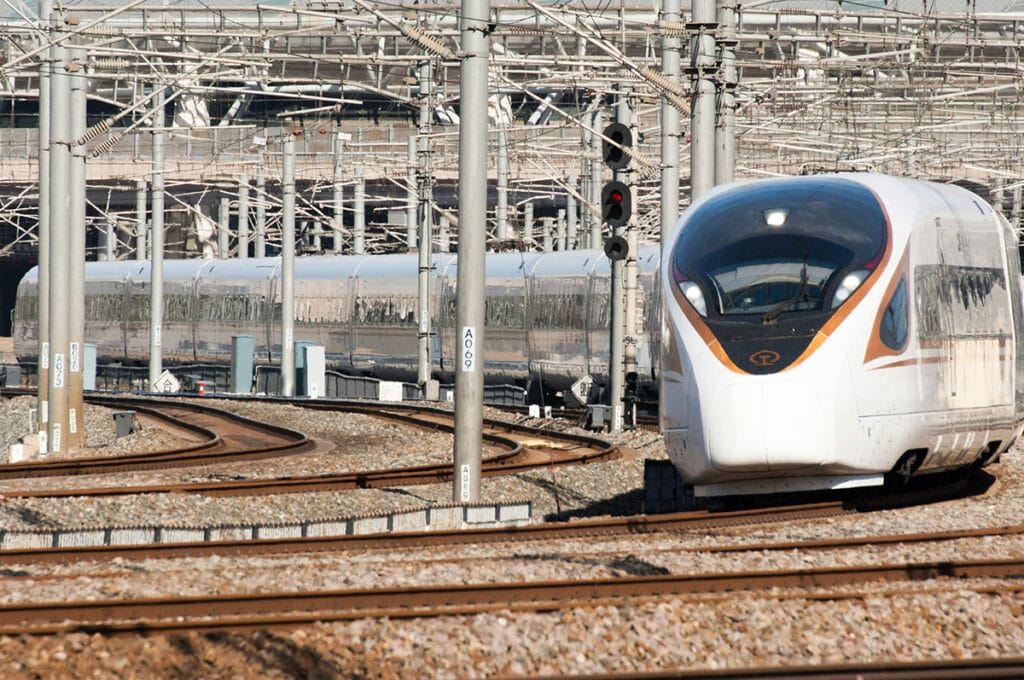
Railway equipment operates under continuous vibration, heavy loads and long service intervals. From traction motors and gearboxes to axle-related assemblies and auxiliary systems, bearing performance directly affects running stability, safety and maintenance planning.
Bearings used in rail applications must handle shock loads, contamination, changing temperatures and demanding duty cycles. Reliable load capacity, dimensional stability and predictable lubrication performance are important across rolling stock and trackside machinery.
Different railway positions place different demands on bearing design. Axle and wheelset systems require strength and impact resistance, while traction motors and gearboxes need stable rotation, heat control and dependable support under continuous operation.
Common bearing solutions for railways include spherical roller bearings, cylindrical roller bearings and tapered roller bearings. Each type supports different load directions, alignment conditions and speed requirements across rail equipment.
Products
Spherical Roller Bearings
Spherical roller bearings are widely used in railway equipment where heavy radial loads, shock loads and shaft misalignment must be managed over long service intervals. Their self-aligning design helps maintain stable operation in axleboxes, suspension-related assemblies and other demanding rail positions.
For rail applications, durability under vibration and contamination is critical. These bearings support dependable operation in harsh outdoor environments while helping reduce maintenance frequency across rolling stock and trackside machinery.
They are especially useful where installation conditions or operating forces may create alignment variation. Strong load capacity and self-aligning performance make them a practical choice for heavy-duty rail systems.
Cylindrical Roller Bearings
Cylindrical roller bearings are suited to traction motors, gearboxes and other railway drive systems that require high radial load capacity and accurate rotational stability. Their line-contact design provides strong support for continuous running under demanding duty cycles.
In rail systems, these bearings help handle high-speed operation, heat generation and repeated load changes. They are a practical choice where rigidity, load capacity and predictable performance are priorities.
Because they provide strong radial support, cylindrical roller bearings are often considered for equipment where shaft stability and efficient power transmission are important. Proper clearance and lubrication selection help extend service life.
Tapered Roller Bearings
Tapered roller bearings are used in railway wheelsets, gearboxes and drive assemblies where radial and axial loads act together. Their geometry provides stable load distribution and supports reliable positioning under heavy operating forces.
For railway machinery, tapered roller bearings are valued for strength, impact resistance and long operating life. They are especially useful in equipment exposed to heavy loads, braking forces and changing track conditions.
These bearings can help control axial movement while carrying high radial forces, making them suitable for robust mechanical assemblies. Accurate mounting and preload control are important for dependable rail performance.
FAQs
What loads can deep groove ball bearings handle?
Railway bearings should be selected according to radial load, axial load, vibration level, speed, mounting position and expected maintenance interval. Axle-related systems, traction motors and gearboxes each place different demands on bearing geometry and internal clearance.
How do I select the right bearing size for my application?
Spherical roller bearings are useful where heavy radial load and misalignment are expected. Cylindrical roller bearings are often chosen for traction motors and gearboxes with high radial loads, while tapered roller bearings support combined radial and axial loads.
What is the difference between open, shielded (ZZ), and sealed (2RS) bearings?
Rail applications usually require strong resistance to shock, vibration, contamination and temperature changes. Proper sealing, lubrication and material selection help extend service life in outdoor and high-duty railway environments.
How often should I lubricate or replace the grease?
Bearing maintenance intervals depend on load, speed, lubrication method, contamination exposure and operating conditions. For railway systems, inspection planning should follow equipment duty cycles and safety requirements rather than a single fixed schedule.
What are the common causes of premature bearing failure?
Common failure causes include insufficient lubrication, contamination, incorrect mounting, excessive preload, misalignment, fatigue and vibration damage. Early noise, heat or vibration changes should be checked before secondary equipment damage occurs.
How is the rated service life (L10) of a bearing calculated?
ETM can support bearing selection for railway equipment based on load conditions, speed, installation space, environment and service-life targets. Customized lubrication, clearance and material options can be considered for demanding rail applications.
Get a Fast Response from Our Team
Share your bearing requirements or project details — our team will review your inquiry and respond with the right product recommendations and pricing.
ETERNUM MOTION TECHNOLOGY