
Application
Machine Tools
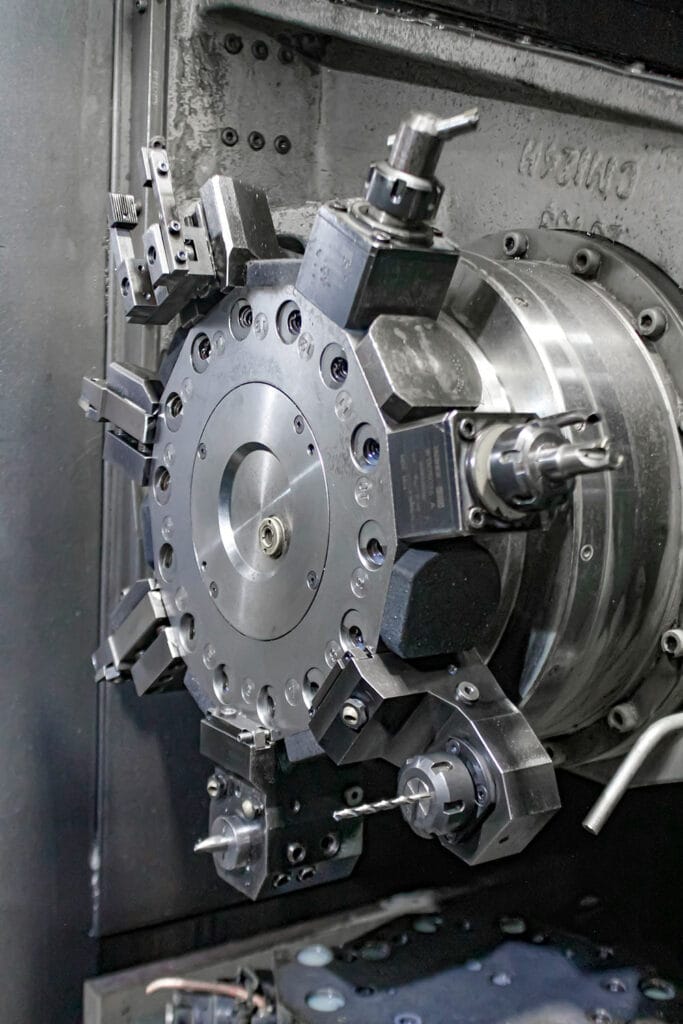
Machine tools exist to remove material with accuracy. A milling machine cutting a aerospace component to micron-level tolerances, a grinding machine finishing a bearing raceway, a turning center producing thousands of identical parts – in every case, the quality of the output is inseparable from the mechanical precision of the machine itself. And at the center of that precision is the spindle, and within the spindle, the bearing.
In machine tool applications, bearings do more than support rotating shafts. They define the envelope within which accurate work is possible. Spindle runout measured in microns, thermal stability across extended production runs, rigidity under cutting forces that shift direction with every change in feed rate – these are not incidental requirements. They are the specification. A bearing that performs adequately in a general industrial motor will fail this standard entirely in a machine tool spindle. The demands are categorically different.
Machine tools encompass a wide range of equipment – machining centers, lathes, grinding machines, gear cutting machines, EDM units, and coordinate measuring machines – each presenting distinct bearing requirements by position and function. Angular contact ball bearings, cylindrical roller bearings, and deep groove ball bearings address the majority of these requirements, often in engineered combinations within the same spindle assembly.
Products
Deep Groove Ball Bearings
Outside the spindle itself, machine tools contain extensive auxiliary motion – axis drive motors, ballscrew end supports, rotary encoders, tool changers, coolant pumps, and hydraulic units. Deep groove ball bearings serve the majority of these positions. Their ability to handle both radial and moderate axial loads, combined with low noise and low torque characteristics, makes them well suited to the support roles that keep a machine tool functioning around the spindle. In high-precision measurement positions such as encoder shafts, the acoustic and rotational consistency of quality deep groove ball bearings directly affects the feedback accuracy of the control system.
Angular Contact Ball Bearings
The primary bearing type for machine tool spindles. Angular contact ball bearings are designed to carry combined radial and axial loads simultaneously, and their contact angle – typically 15 degrees, 25 degrees, or 40 degrees depending on the application – determines the balance between axial rigidity and high-speed capability. In spindle assemblies, they are almost always arranged in sets: back-to-back (DB), face-to-face (DF), or tandem (DT) configurations, each optimizing for a different load and stiffness profile. Applied preload eliminates internal clearance, suppresses vibration, and establishes the shaft positioning accuracy that machining tolerances depend on. For high-speed spindles in machining centers and grinding machines, angular contact ball bearings in precision grades P4 or P2 are the standard specification.
Cylindrical Roller Bearings
Where radial load capacity and stiffness take priority – heavy-duty turning centers, large boring mills, gear hobbing machines – cylindrical roller bearings provide a capability that ball bearings cannot match. Line contact between rollers and raceways distributes load across a larger surface area, significantly increasing radial rigidity and load rating. In machine tool spindles, cylindrical roller bearings are frequently paired with angular contact ball bearings: the roller bearing handles radial loads at the front of the spindle, while angular contact bearings manage axial positioning at the rear. This combination extracts the best characteristics from each type without compromise.
FAQs
What loads can deep groove ball bearings handle?
Deep groove ball bearings are primarily designed for radial loads, but they can also handle moderate axial (thrust) loads in both directions. They are not suitable for heavy axial loads or combined shock loads. In those cases, angular contact or tapered roller bearings are preferred.
How do I select the right bearing size for my application?
Selection should be based on bore diameter (shaft size), required load capacity (dynamic rating C and static rating C0), operating speed compared with the bearing limiting speed, available space (outer diameter and width), and required precision grade from P0 to P2. Always apply a safety factor and verify that the calculated L10 service life meets your requirements.
What is the difference between open, shielded (ZZ), and sealed (2RS) bearings?
Open: No built-in protection, requires external sealing, and is suitable for clean environments or oil bath lubrication.
ZZ metal shields: Protect against dust and debris with low friction, making them suitable for high-speed applications, but they are not waterproof.
2RS rubber seals: Provide strong protection against dust and moisture. They are pre-greased and ideal for contaminated environments, but generate slightly more friction.
How often should I lubricate or replace the grease?
For general industrial use, grease should be replenished or replaced every 3,000 to 10,000 operating hours depending on speed, temperature, and environmental conditions. Bearings running above 70 C or in contaminated environments require shorter intervals. Sealed 2RS bearings are pre-greased for life and do not require re-lubrication.
What are the common causes of premature bearing failure?
The most frequent causes include inadequate or improper lubrication, contamination by dirt, dust, or moisture, incorrect installation, misalignment, excessive force during fitting, overloading beyond the rated capacity, improper shaft or housing fits, and fatigue at the end of normal service life.
How is the rated service life (L10) of a bearing calculated?
The basic L10 life is calculated as L10 = (C / P)^3 x 10^6 revolutions, where C is the dynamic load rating in kN and P is the equivalent dynamic bearing load in kN. It represents the number of revolutions that 90% of identical bearings will complete without fatigue failure. In practice, ISO 281 modified life calculations also apply correction factors for lubrication, contamination, material, and reliability.
Get a Fast Response from Our Team
Share your bearing requirements or project details — our team will review your inquiry and respond with the right product recommendations and pricing.
ETERNUM MOTION TECHNOLOGY