
Products
Thin Section Bearings
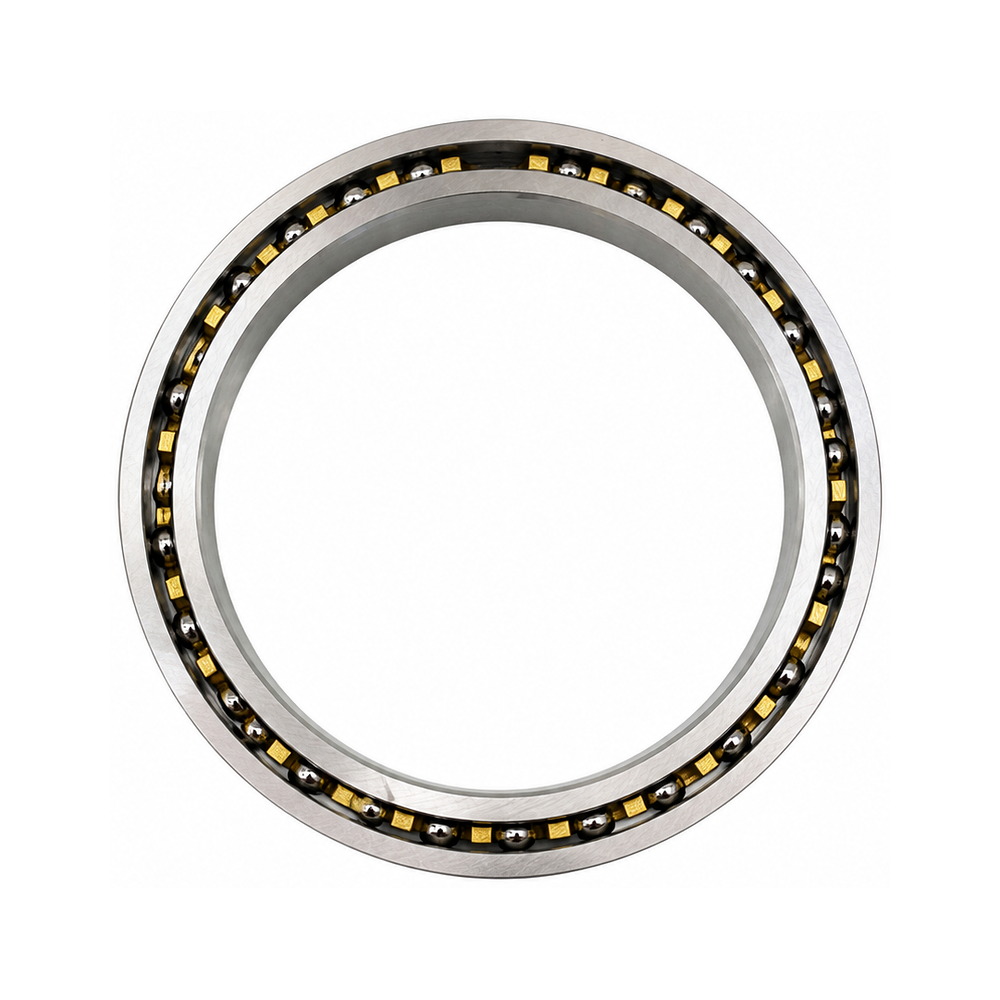
Product Overview
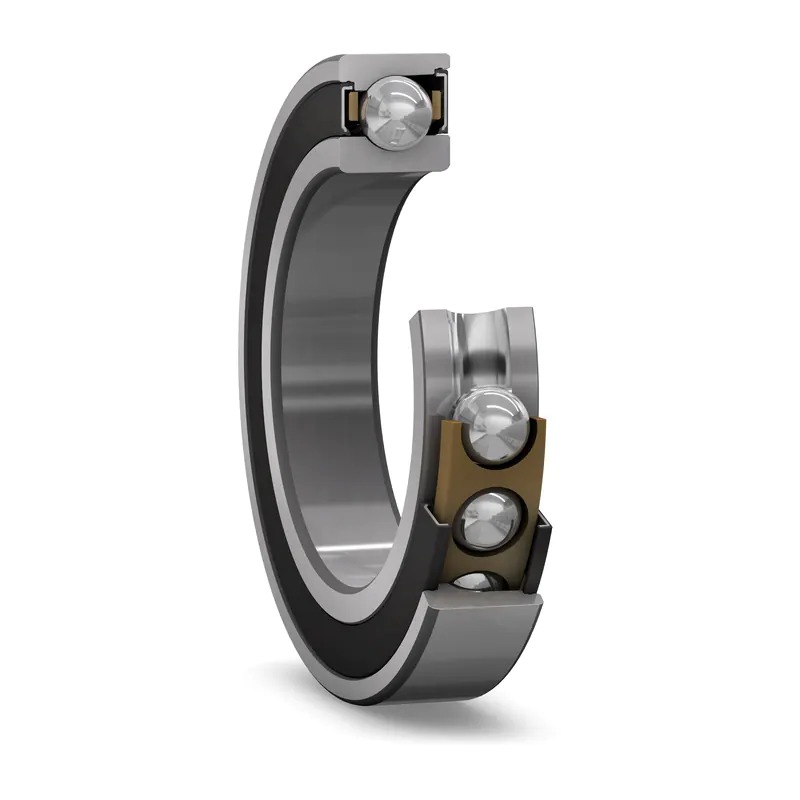
Thin Section Bearings are specialized rolling bearings designed with a narrow and lightweight cross-section relative to their bore diameter. In many series, the cross-section remains nearly constant across different bore sizes, allowing engineers to reduce weight, save installation space, and simplify compact mechanical designs. They are suitable for applications where space, weight, and rotational accuracy are important design factors.
Thin Section Bearings are available in different configurations, including radial contact, angular contact, and four-point contact designs, allowing them to support radial loads, axial loads, moment loads, or combined loads depending on the application. Common options include open and sealed designs, with cage materials and lubrication methods selected according to operating speed, contamination level, and service requirements.
Standard precision grades are commonly available, while higher precision specifications can be supplied upon request for applications requiring improved running accuracy and stability. With their compact structure, low weight, and flexible load-carrying options, Thin Section Bearings are widely used in robotics, automation equipment, medical devices, semiconductor equipment, optical instruments, and precision machinery.
Technical Specifications
| Series | KX (Radial Contact), KA (Angular Contact), KF (Four-Point Contact) |
| Bore Diameter Range | 8mm – 1000mm+ |
| Outer Diameter Range | 20mm – 1050mm+ |
| Cross-Section Options | Standard, thin, extra-thin (constant section across bore range) |
| Cage Material Options | Polyamide PA66, brass machined, steel stamped |
| Seal / Shield Options | Open, RS rubber seal, 2RS double-sided seal |
| Precision Grades | ABEC 1 standard, ABEC 3, ABEC 5, ABEC 7 high precision |
| Radial Clearance | CN normal, C2 reduced, C3 increased |
| Material Standard | Gcr15 / 52100 chrome steel, stainless steel SS440 |
| Temperature Range | -40°C to +120°C standard, up to +180°C high temperature |
| Lubrication | Grease standard, vacuum-compatible grease optional |
| Standards Met | ISO 9001, ANSI/ABMA, ISO dimensional series for thin-section bearings |
Key Features
- Constant cross-section across bore range – within a given series, the same cross-sectional dimensions apply across multiple bore sizes, simplifying design standardization
- Significant weight and space savings – substantially lower mass and reduced installation footprint compared to standard-section bearings of the same bore size
- High moment load capacity – particularly in four-point contact designs, capable of resisting tilting moments despite the thin cross-section
- Multiple cross-section variants – standard, thin, and extra-thin sections available within the same bore size for further space optimization
- Suitable for both standard and vacuum/cleanroom environments, with select series available in low-outgassing materials and coatings
- Compliant with international standards, including ANSI/ABMA and ISO dimensional series for thin-section bearings
Applications
Thin Section Bearings are widely used in robotics and automation equipment, particularly in robotic arm joints and rotary actuators, where minimizing weight and size directly improves system dynamics and payload capacity.
In semiconductor manufacturing and precision automation equipment, the series supports rotary tables, wafer handling systems, and other mechanisms requiring high precision within compact, often vacuum-compatible, assemblies.
In medical imaging equipment, such as CT and MRI gantries, Thin Section Bearings provide the large-bore, lightweight rotational support required for rotating scanner components.
In aerospace and satellite systems, the series is used in antenna positioners, solar array drive mechanisms, and other rotating assemblies where weight reduction is a critical design priority.
The series is also widely applied in optical equipment, telescopes, indexing tables, and other precision rotary platforms, wherever a combination of large bore diameter, minimal cross-section, and reliable load support is required within a tightly constrained envelope.

Electric Tools
- Read More

Automotive
- Read More
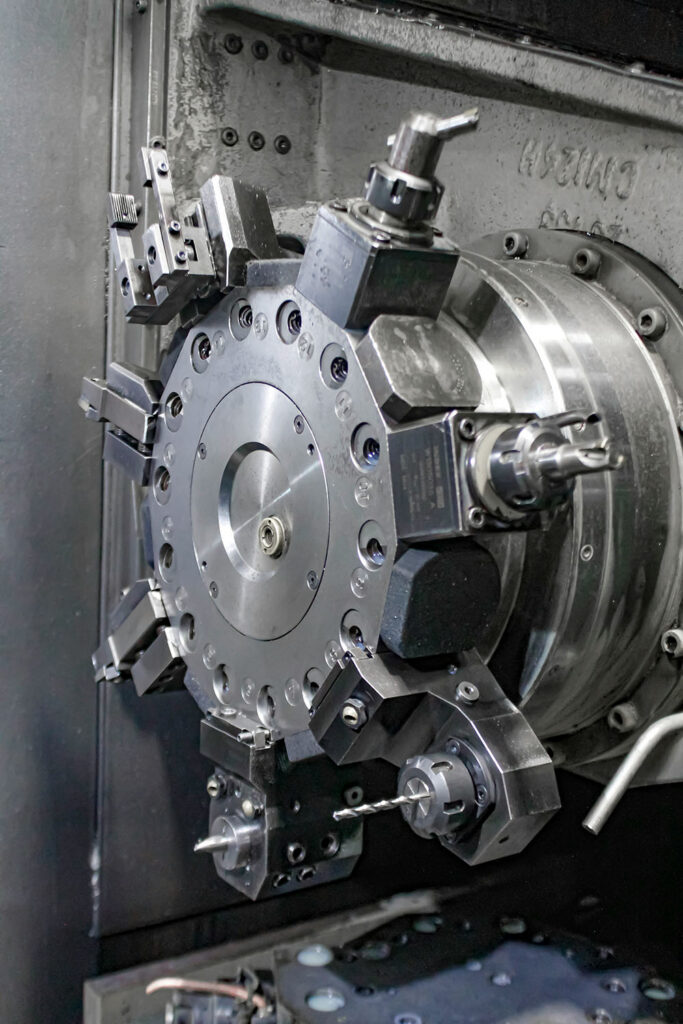
Machine Tools
- Read More
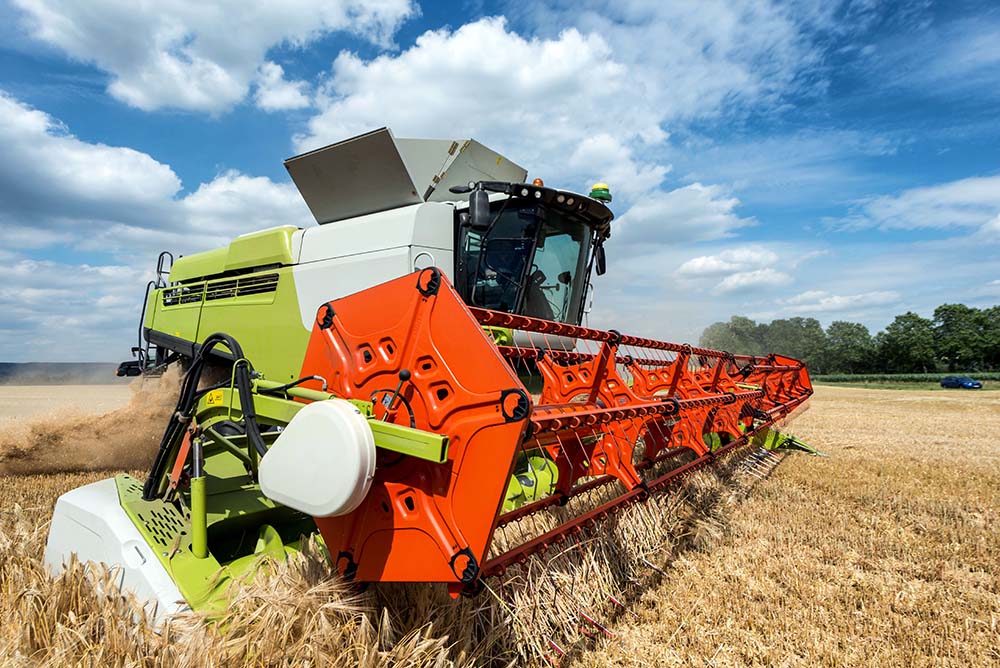
Agriculture Machinery
- Read More

Food and Beverage
- Read More

Robotics
- Read More
Technical Resources
Whether you are an engineer, procurement manager, or equipment maintenance professional, here you will find in-depth content covering bearing operating principles, technical parameter interpretation, industry application analysis, and selection logic — helping you build a comprehensive understanding of bearing products and make more informed decisions in real-world applications.
FAQs
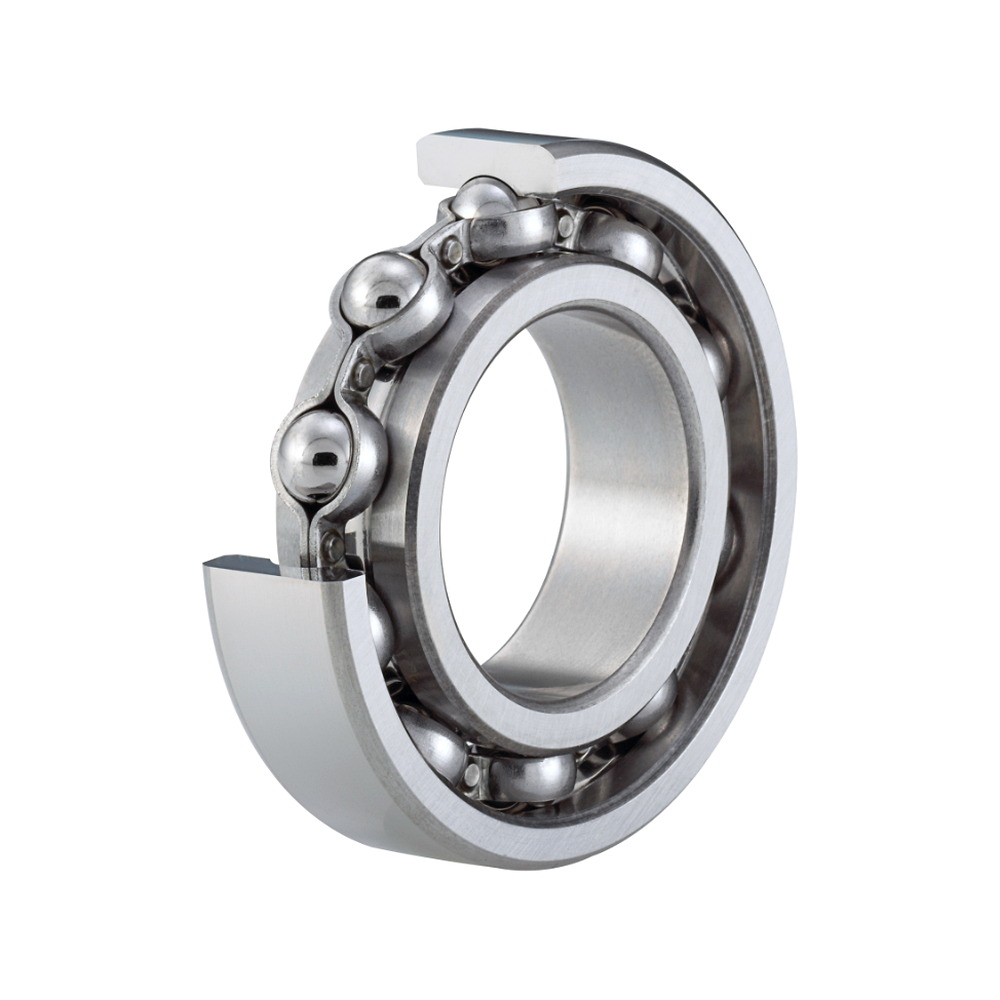
What loads can deep groove ball bearings handle?
Deep groove ball bearings are primarily designed for radial loads, but they can also handle moderate axial (thrust) loads in both directions. They are not suitable for heavy axial loads or combined shock loads. In those cases, angular contact or tapered roller bearings are preferred.
How do I select the right bearing size for my application?
Selection should be based on bore diameter (shaft size), required load capacity (dynamic rating C and static rating C0), operating speed compared with the bearing limiting speed, available space (outer diameter and width), and required precision grade from P0 to P2. Always apply a safety factor and verify that the calculated L10 service life meets your requirements.
What is the difference between open, shielded (ZZ), and sealed (2RS) bearings?
Open: No built-in protection, requires external sealing, and is suitable for clean environments or oil bath lubrication.
ZZ metal shields: Protect against dust and debris with low friction, making them suitable for high-speed applications, but they are not waterproof.
2RS rubber seals: Provide strong protection against dust and moisture. They are pre-greased and ideal for contaminated environments, but generate slightly more friction.
How often should I lubricate or replace the grease?
For general industrial use, grease should be replenished or replaced every 3,000 to 10,000 operating hours depending on speed, temperature, and environmental conditions. Bearings running above 70 C or in contaminated environments require shorter intervals. Sealed 2RS bearings are pre-greased for life and do not require re-lubrication.
What are the common causes of premature bearing failure?
The most frequent causes include inadequate or improper lubrication, contamination by dirt, dust, or moisture, incorrect installation, misalignment, excessive force during fitting, overloading beyond the rated capacity, improper shaft or housing fits, and fatigue at the end of normal service life.
How is the rated service life (L10) of a bearing calculated?
The basic L10 life is calculated as L10 = (C / P)^3 x 10^6 revolutions, where C is the dynamic load rating in kN and P is the equivalent dynamic bearing load in kN. It represents the number of revolutions that 90% of identical bearings will complete without fatigue failure. In practice, ISO 281 modified life calculations also apply correction factors for lubrication, contamination, material, and reliability.
Get a Fast Response from Our Team
Share your bearing requirements or project details — our team will review your inquiry and respond with the right product recommendations and pricing.
ETERNUM MOTION TECHNOLOGY