
Application
Mining Machinery
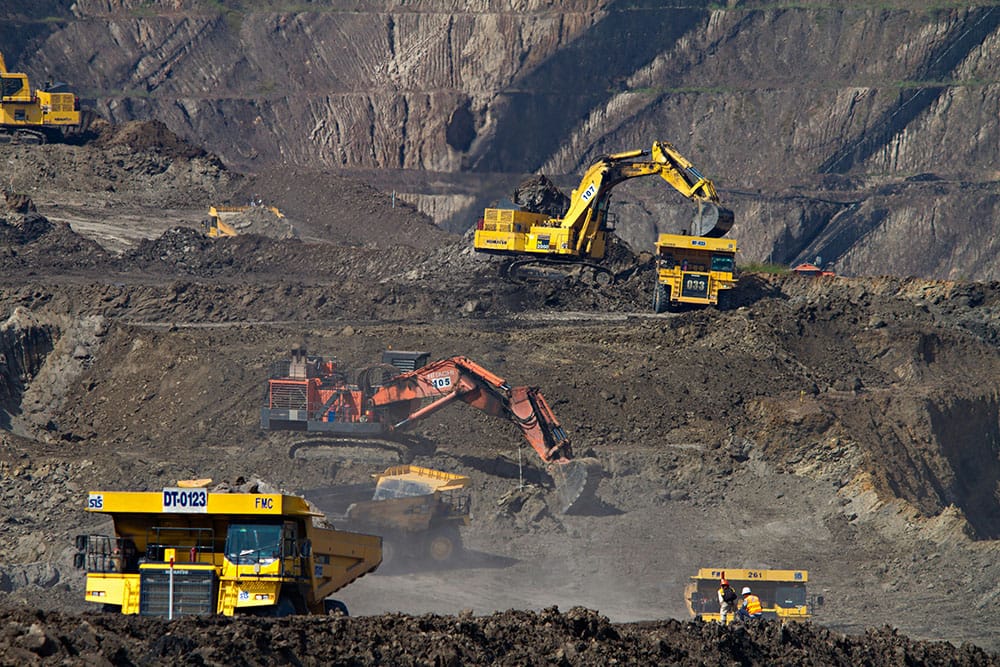
Mining machinery operates under conditions that represent the outer limit of what mechanical equipment is routinely asked to endure. A cone crusher reducing ore around the clock, a longwall shearer cutting through coal seams underground, a mine hoist lifting loaded skips on every cycle, a belt conveyor carrying thousands of tonnes across kilometers of tunnel — these machines run continuously in environments saturated with abrasive dust, water, and debris, under loads that are routine here but exceptional elsewhere.
Downtime in a mining operation is not a scheduling inconvenience. It halts production across an entire site and generates losses that compound by the hour.The bearing requirements reflect this reality: extreme load capacity, resistance to severe shock and impact, reliable sealing against abrasive contamination, and the ability to run across extended maintenance intervals. Compact size and low noise are secondary — what matters is that the bearing survives the environment and keeps the machine running.
Mining machinery spans underground shearers, roadheaders, cone and jaw crushers, ball mills, mine hoists, belt conveyors, and heavy mining trucks, each placing severe demands on its bearing positions. Spherical roller bearings, cylindrical roller bearings, and thrust bearings cover the majority of critical applications, each addressing conditions considered extreme in almost any other field.
Products
Spherical Roller Bearings
The workhorse bearing of heavy mining machinery. Spherical roller bearings appear in the most demanding positions across the full range of mining equipment — crusher main shafts, conveyor drive pulleys, shearer ranging arm drives, ball mill trunnions, and the primary shaft supports of roadheader cutting heads. Their combination of high radial load capacity, ability to absorb axial loads in both directions, and self-aligning geometry makes them uniquely suited to mining conditions.
Underground structures flex. Long conveyor shafts deflect under load. Crusher frames distort as feed material varies. Spherical roller bearings accommodate this misalignment without generating destructive edge loading, and their two-row roller geometry provides the load capacity that single-row designs cannot approach. In mining applications, heavy-duty sealing arrangements and high-viscosity greases rated for contaminated environments are standard. The 222xx, 223xx, and 232xx series account for a significant proportion of critical bearing positions across underground and surface mining equipment alike.
Cylindrical Roller Bearings
Where pure radial load capacity is the dominant requirement and the shaft support arrangement provides axial location separately — gearbox input and output shafts in shearer drives, mill pinion shaft supports, conveyor gearbox bearing positions — cylindrical roller bearings deliver load ratings that ball bearings of equivalent size cannot match, with friction characteristics that remain acceptable even under sustained heavy loading.
Mining gearboxes transmit enormous torques, and the shaft bearings within them must carry the resulting radial forces across operating cycles measured in thousands of hours. Cylindrical roller bearings meet this requirement directly. Their line contact between roller and raceway distributes load across a significantly larger area than point contact alternatives, reducing contact stress and extending fatigue life in applications where bearing loads are high by definition rather than by exception. The NU and NJ series configurations are particularly common, providing radial location while allowing controlled axial displacement to accommodate thermal expansion in heavily loaded shaft systems.
Thrust Bearings
Mining machinery generates axial forces of a scale that few other industries routinely encounter. A mine hoist drum must be axially located against the forces generated by fleet angle variation in the winding rope. A vertical crusher shaft carries the full weight of the rotating assembly plus the axial component of crushing forces transmitted through the eccentric mechanism. A gyratory crusher mantle exerts substantial axial thrust against its support structure on every crushing cycle. Thrust bearings — whether tapered roller thrust type or spherical roller thrust type where misalignment must also be accommodated — handle these axial loads as their primary function.
In mine hoist installations, large-diameter thrust bearings carry drum weight and cable tension simultaneously across decades of service with minimal access for inspection. In crusher applications, spherical roller thrust bearings combine axial load capacity with the self-aligning capability that an eccentric-driven shaft demands. Wherever axial forces reach magnitudes that would overwhelm the incidental axial capacity of a radial bearing, dedicated thrust bearing arrangements are the correct engineering response.
Get a Fast Response from Our Team
Share your bearing requirements or project details — our team will review your inquiry and respond with the right product recommendations and pricing.
ETERNUM MOTION TECHNOLOGY
Send an Inquiry
FAQs
What loads can deep groove ball bearings handle?
Deep groove ball bearings are primarily designed for radial loads, but they can also handle moderate axial (thrust) loads in both directions. They are not suitable for heavy axial loads or combined shock loads. In those cases, angular contact or tapered roller bearings are preferred.
How do I select the right bearing size for my application?
Selection should be based on bore diameter (shaft size), required load capacity (dynamic rating C and static rating C0), operating speed compared with the bearing limiting speed, available space (outer diameter and width), and required precision grade from P0 to P2. Always apply a safety factor and verify that the calculated L10 service life meets your requirements.
What is the difference between open, shielded (ZZ), and sealed (2RS) bearings?
Open: No built-in protection, requires external sealing, and is suitable for clean environments or oil bath lubrication.
ZZ metal shields: Protect against dust and debris with low friction, making them suitable for high-speed applications, but they are not waterproof.
2RS rubber seals: Provide strong protection against dust and moisture. They are pre-greased and ideal for contaminated environments, but generate slightly more friction.
How often should I lubricate or replace the grease?
For general industrial use, grease should be replenished or replaced every 3,000 to 10,000 operating hours depending on speed, temperature, and environmental conditions. Bearings running above 70 C or in contaminated environments require shorter intervals. Sealed 2RS bearings are pre-greased for life and do not require re-lubrication.
What are the common causes of premature bearing failure?
The most frequent causes include inadequate or improper lubrication, contamination by dirt, dust, or moisture, incorrect installation, misalignment, excessive force during fitting, overloading beyond the rated capacity, improper shaft or housing fits, and fatigue at the end of normal service life.
How is the rated service life (L10) of a bearing calculated?
The basic L10 life is calculated as L10 = (C / P)^3 x 10^6 revolutions, where C is the dynamic load rating in kN and P is the equivalent dynamic bearing load in kN. It represents the number of revolutions that 90% of identical bearings will complete without fatigue failure. In practice, ISO 281 modified life calculations also apply correction factors for lubrication, contamination, material, and reliability.