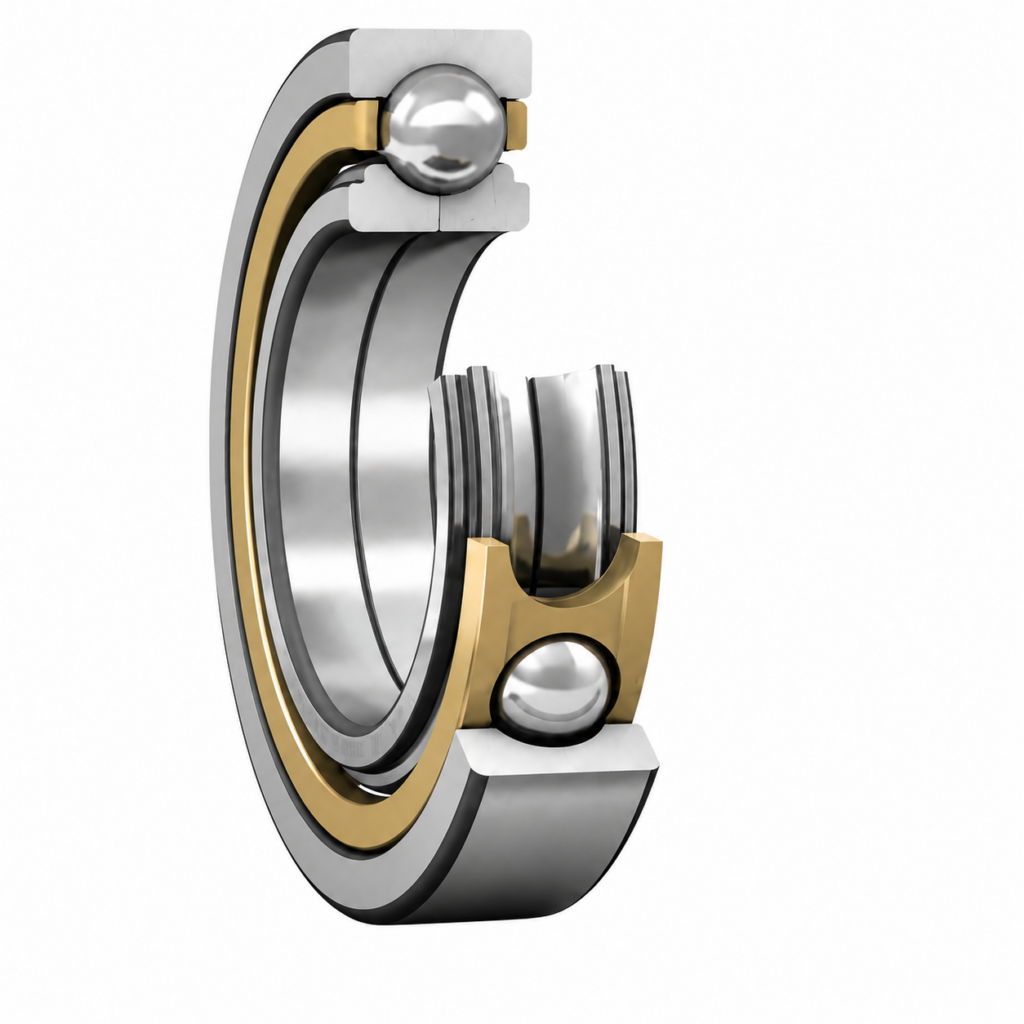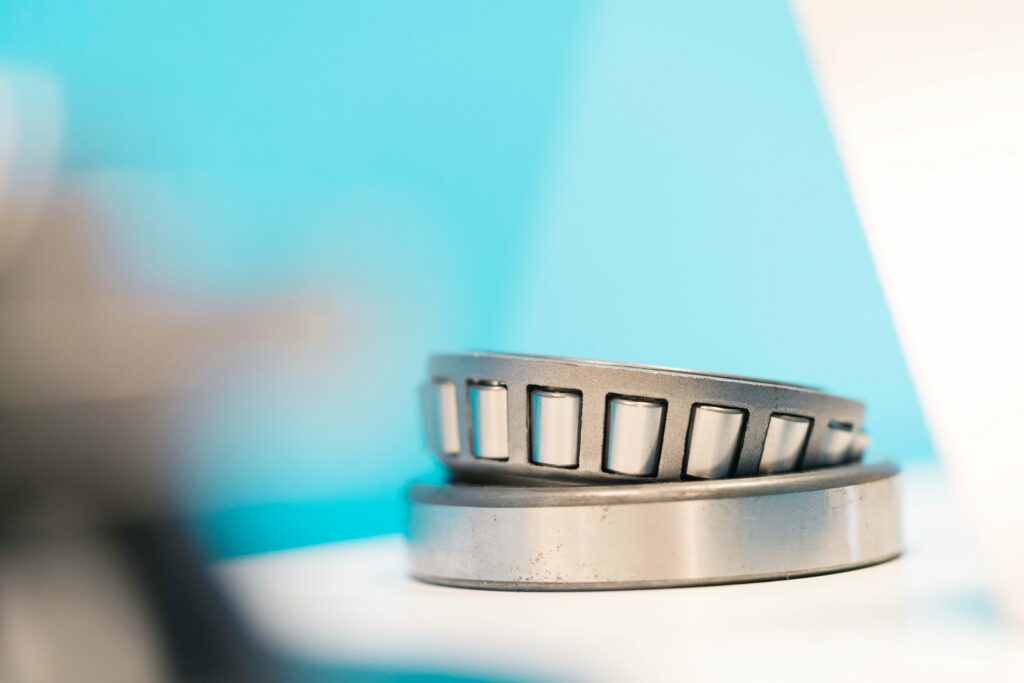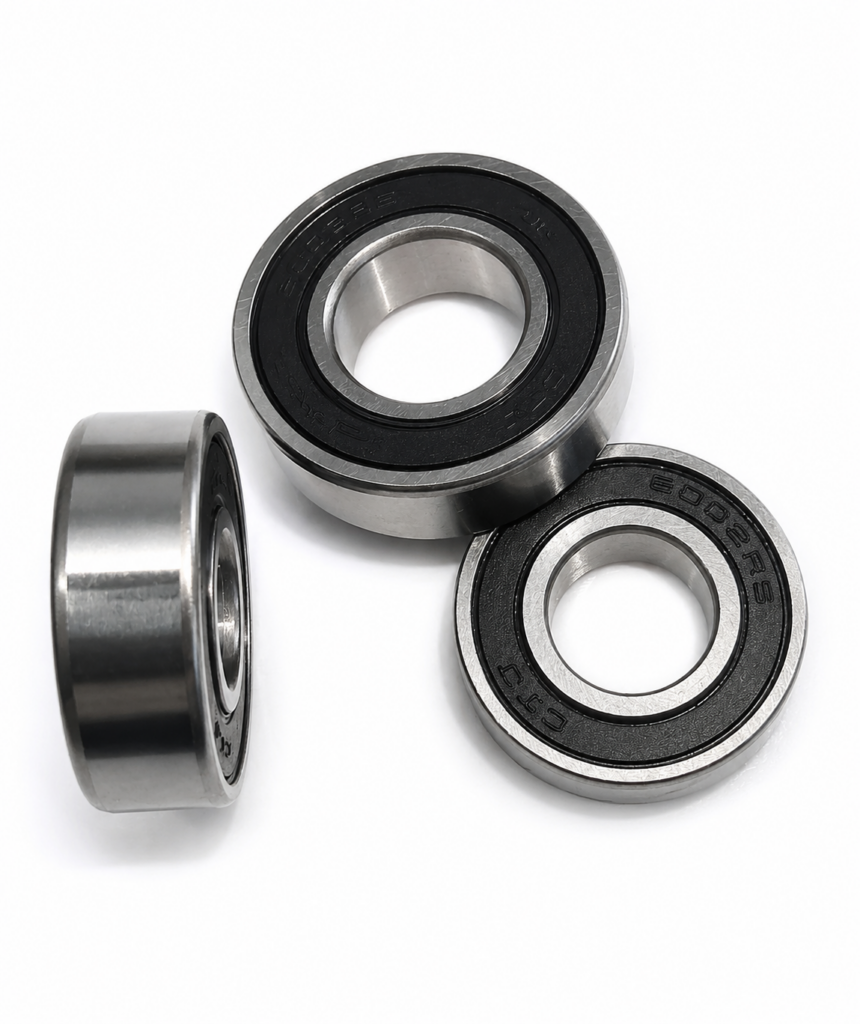
Deep groove ball bearings are the most widely used type of rolling bearing in the world. From household appliances to electric motors, automobiles, and heavy industrial machinery, this simple yet highly efficient component plays a critical role in keeping rotating equipment running smoothly. In this guide, we’ll explore what deep groove ball bearings are, how they work, their key features, common types and sizes, how to select the right one, and where they are typically used.
What Is a Deep Groove Ball Bearing?
A deep groove ball bearing is a type of rolling-element bearing designed with deep, continuous grooves on both the inner and outer rings. These grooves allow the bearing to support both radial loads and moderate axial (thrust) loads in both directions, making it one of the most versatile bearing designs available.
Because of this versatility, low cost, and simple structure, deep groove ball bearings account for a large share of all rolling bearings produced globally. They are often the default choice for engineers unless a specific application demands a more specialized bearing type.
Basic Structure and Components
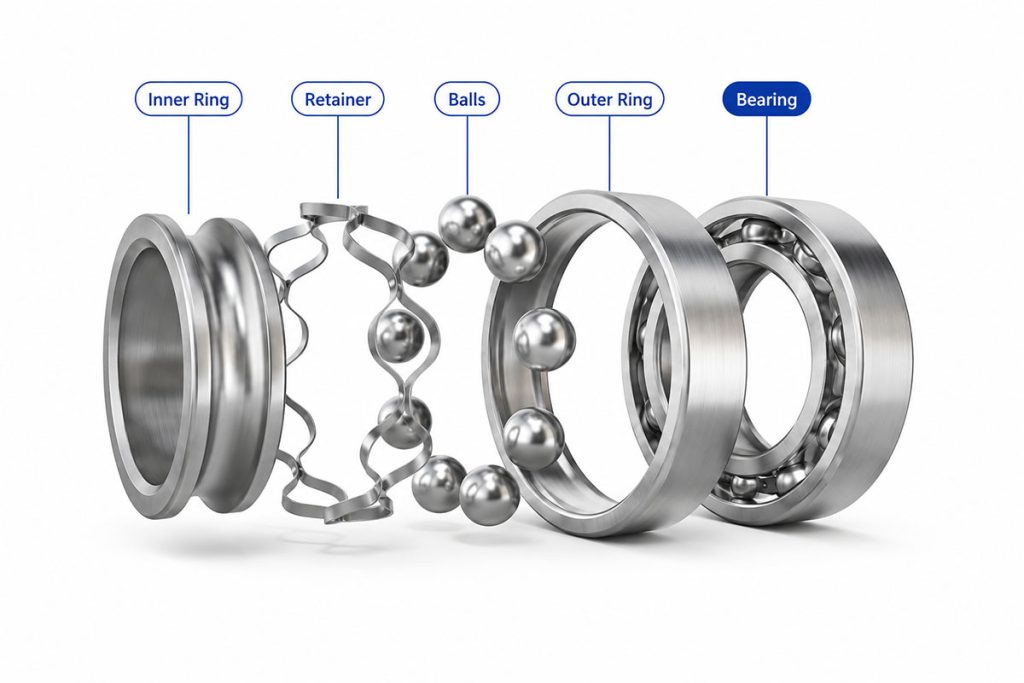
A standard deep groove ball bearing consists of four main parts:
- Inner Ring – Mounted on the rotating shaft; has a groove that matches the curvature of the balls.
- Outer Ring – Fitted into the housing; also has a matching groove.
- Balls (Rolling Elements) – Precision-ground steel (or ceramic) balls that roll between the inner and outer rings, reducing friction.
- Cage (Retainer) – Keeps the balls evenly spaced and prevents them from contacting each other, reducing wear and noise.
Many deep groove ball bearings also include sealing or shielding options:
- Open Type – No seal or shield; allows for external lubrication but exposes internals to contamination.
- Z / ZZ (Shielded) – Metal shields on one or both sides to keep out larger debris while still allowing some grease replenishment.
- RS / 2RS (Sealed) – Rubber or synthetic seals on one or both sides, offering the best protection against dust, moisture, and contaminants, though at the cost of slightly higher friction.
How Deep Groove Ball Bearings Work
The fundamental working principle is rolling friction. Instead of two surfaces sliding against each other (as in plain bearings), the balls roll between the inner and outer rings, dramatically reducing friction and heat generation. This allows the bearing to support rotation at high speeds with minimal energy loss.
The “deep groove” geometry is key to the bearing’s dual-load capability:
- Radial Load Capacity – The primary function; the bearing supports loads perpendicular to the shaft.
- Axial (Thrust) Load Capacity – Because the groove is deep, the bearing can also handle moderate thrust loads in either direction along the shaft axis, something many other ball bearing types cannot do without modification.
This combination of radial and axial load-bearing capacity, along with the ability to operate at high rotational speeds, sets deep groove ball bearings apart from designs such as angular contact ball bearings (which handle higher unidirectional axial loads) or cylindrical roller bearings (which handle higher radial loads but no axial load).
Key Features and Advantages
- High-Speed Capability – Low friction design supports high RPM applications such as motors and spindles.
- Low Noise and Vibration – Precision manufacturing and ball-rolling action minimize operational noise.
- Simple, Compact Design – Fewer components than tapered or angular bearings, making them easier and cheaper to manufacture.
- Bidirectional Axial Load Support – Useful in applications where thrust direction may reverse.
- Wide Availability – Standardized sizing makes replacement parts easy to source worldwide.
- Long Service Life – When properly lubricated and loaded within rated limits, these bearings offer excellent durability.
Common Types, Sizes, and Materials
Deep groove ball bearings follow standardized naming conventions (ISO/ABMA), typically structured as a series number followed by a bore size code. For example:
- 6200 series – Light/standard duty, common bore sizes from 10mm upward.
- 6300 series – Medium duty, slightly larger cross-section for higher load capacity.
- 6000 series – Smaller, lighter duty bearings often used in compact electronics or small motors.
The last two digits of the bearing number (multiplied by 5) typically indicate the bore diameter in millimeters. For instance, a 6205 bearing has a 25mm bore.
Common materials include:
- Chrome Steel (GCr15/52100) – Standard, cost-effective, widely used.
- Stainless Steel – Corrosion-resistant, suited for food processing, marine, or medical equipment.
- Ceramic Hybrid Bearings – Ceramic balls with steel rings, offering higher speed capability, less weight, and resistance to electrical pitting.
- Full Ceramic Bearings – Used in extreme environments requiring non-conductivity or chemical resistance.
How to Select the Right Deep Groove Ball Bearing
Choosing the correct bearing requires evaluating several factors:
- Load Requirements – Determine the magnitude and direction (radial, axial, or combined) of the load. Heavier axial loads may require an angular contact or thrust bearing instead.
- Rotational Speed – Check the bearing’s limiting speed rating against your application’s RPM requirements.
- Operating Environment – Consider temperature extremes, exposure to dust, moisture, or chemicals. This will guide your choice between open, shielded, or sealed variants.
- Lubrication Type – Grease is standard for most applications; oil lubrication may be needed for very high speeds or temperatures.
- Precision Class – Standard precision (ABEC 1/3) suits general use; higher precision classes (ABEC 5/7/9) are needed for high-speed or high-accuracy machinery.
- Mounting and Fit – Ensure correct shaft and housing tolerances to avoid premature wear or failure.
Typical Applications
Deep groove ball bearings are used across nearly every industry due to their versatility:
- Electric Motors and Fans – High-speed, low-friction rotation support.
- Automotive – Wheel hubs, transmissions, alternators, and water pumps.
- Household Appliances – Washing machines, air conditioners, vacuum cleaners.
- Industrial Machinery – Pumps, gearboxes, conveyors, and compressors.
- Power Tools – Drills, grinders, and saws requiring compact, durable rotation support.
Installation and Maintenance Tips
Proper installation and maintenance significantly extend bearing life:
- Use Correct Mounting Tools – Avoid hammering directly on bearing rings; use proper presses or induction heaters for interference fits.
- Maintain Cleanliness – Contaminants are a leading cause of premature bearing failure.
- Lubricate Appropriately – Follow manufacturer guidelines for grease type and replenishment intervals.
- Monitor for Warning Signs – Unusual noise, vibration, or heat often indicate misalignment, contamination, or insufficient lubrication.
- Replace in Pairs (When Applicable) – For symmetrical loads, replacing bearings in sets can prevent uneven wear issues.
Deep Groove Ball Bearings vs. Other Bearing Types
| Feature | Deep Groove Ball Bearing | Angular Contact Ball Bearing | Cylindrical Roller Bearing |
|---|---|---|---|
| Radial Load | Good | Good | Excellent |
| Axial Load | Moderate, bidirectional | High, unidirectional (often paired) | None/Minimal |
| Speed Capability | High | High | Moderate to High |
| Cost | Low | Medium | Medium |
| Common Use | General purpose | High-precision spindles, gearboxes | Heavy radial loads |
Conclusion
Deep groove ball bearings remain the backbone of rotating machinery across nearly every industry, thanks to their balanced load capacity, high-speed performance, and cost-effective simplicity. Whether you’re designing a small household appliance or a heavy-duty industrial system, understanding the structure, working principle, and selection criteria of deep groove ball bearings will help you choose the right component for reliable, long-lasting performance.
If you’re unsure which bearing type or size best fits your application, consulting a bearing supplier or engineer with your specific load, speed, and environmental requirements is always recommended.