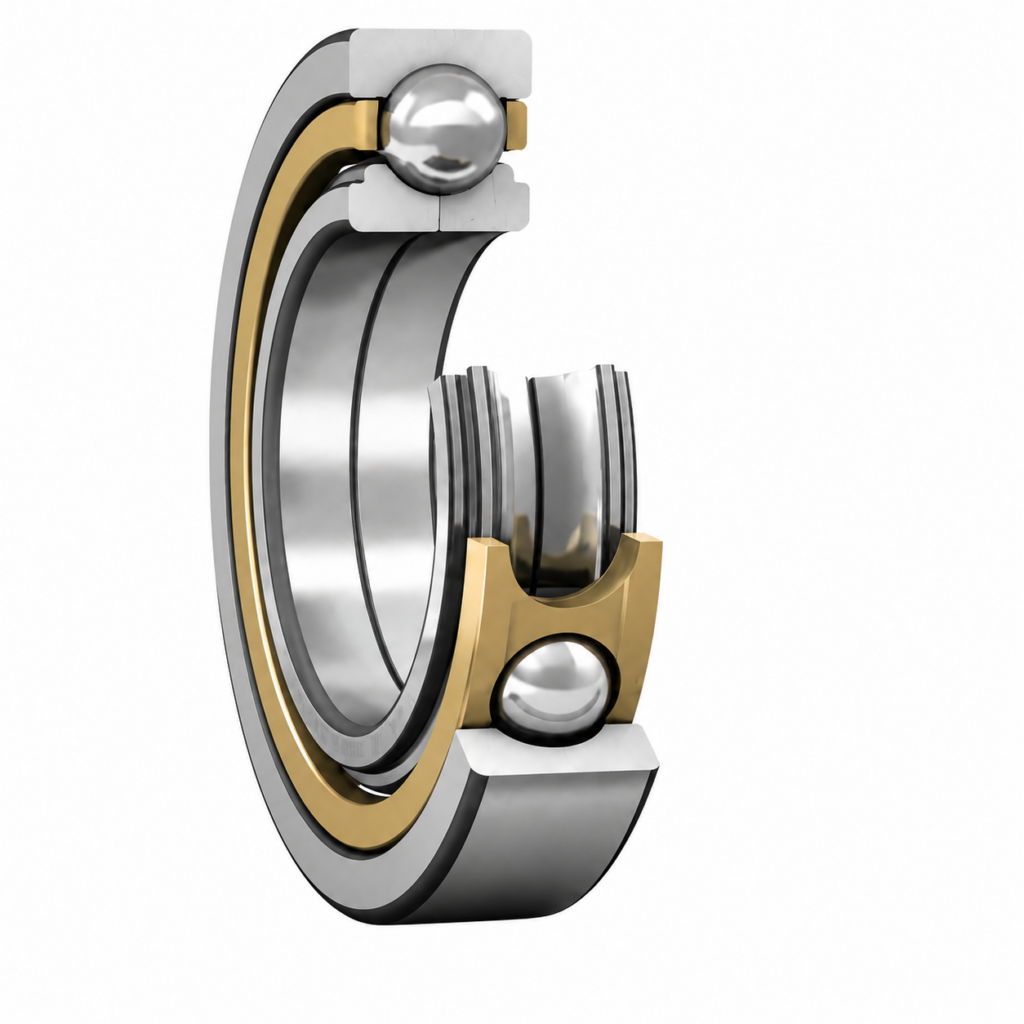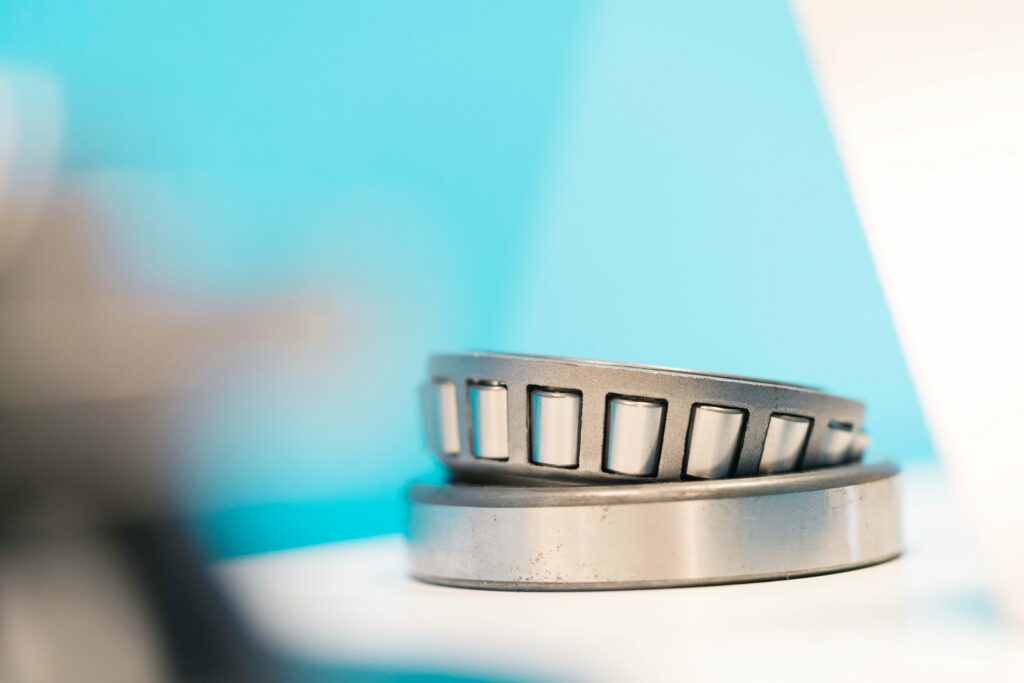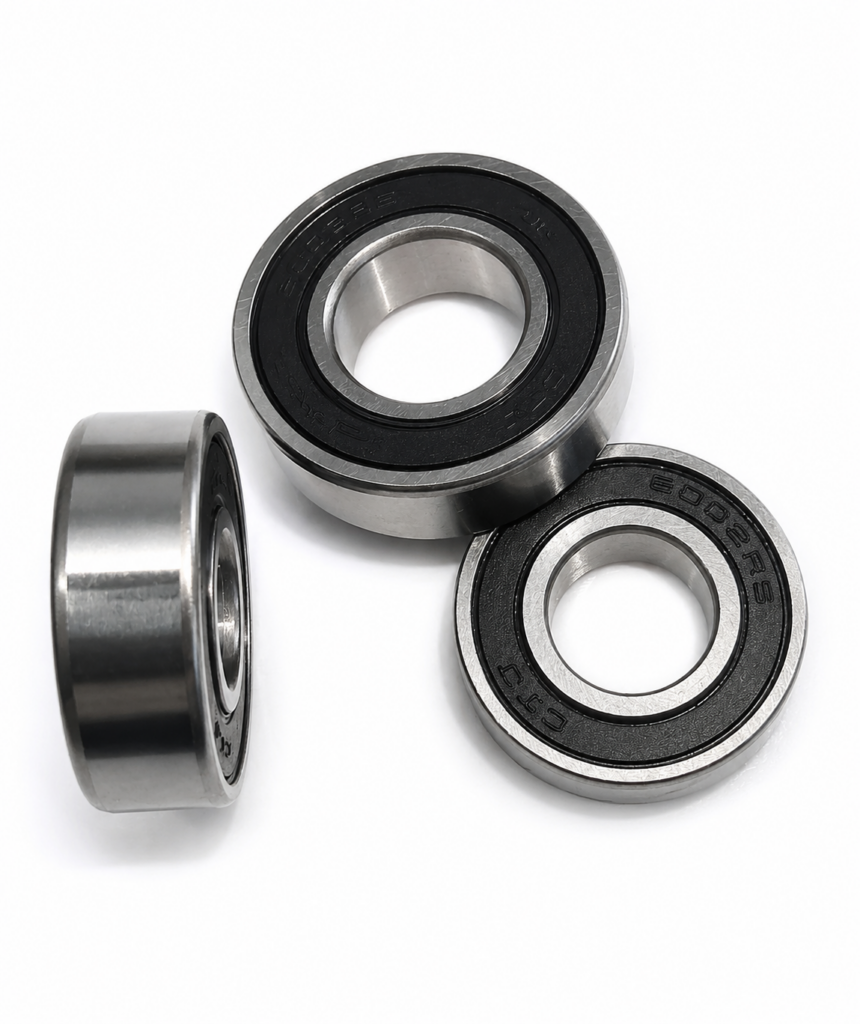
Tapered roller bearings are one of the most robust and versatile bearing types used in heavy-duty rotating machinery. Unlike deep groove ball bearings, which are optimized for general-purpose use with moderate loads, tapered roller bearings are specifically engineered to handle high combined radial and axial loads, making them indispensable in automotive, industrial, and heavy machinery applications. In this guide, we’ll explore the structure, working principle, key features, common configurations, selection criteria, and typical applications of tapered roller bearings.
What Is a Tapered Roller Bearing?
A tapered roller bearing is a type of rolling-element bearing that uses cone-shaped (tapered) rollers arranged between a tapered inner ring (cone) and a tapered outer ring (cup). The tapered geometry of both the rollers and the raceways allows the bearing to simultaneously support heavy radial loads and substantial axial (thrust) loads in one direction — far beyond what a standard deep groove ball bearing can handle.
This combined load-carrying capability makes tapered roller bearings the preferred choice in applications where shafts experience both radial forces (such as gear meshing forces) and axial forces (such as thrust from gears, wheels, or shafts under angled loading).
Structure and Components
A tapered roller bearing typically consists of four main parts:
- Cone (Inner Ring Assembly) – Includes the inner ring with its tapered raceway, the tapered rollers, and the cage, often supplied as a single assembled unit.
- Cup (Outer Ring) – The outer ring with a matching tapered raceway, often supplied separately from the cone assembly.
- Tapered Rollers – Cone-shaped rolling elements that distribute load along their full length, providing line contact rather than point contact (as with balls), which increases load capacity.
- Cage (Retainer) – Keeps the rollers evenly spaced and properly aligned within the cone assembly.
A distinctive feature of tapered roller bearings is their separable design: the cone assembly and cup can often be installed independently, which simplifies mounting, dismounting, and clearance adjustment — something not possible with most deep groove ball bearings.
Working Principle
The fundamental principle behind tapered roller bearings lies in their geometry. Both the rollers and the raceways are shaped like sections of a cone, and their axes, if extended, converge at a common point on the bearing’s central axis. This geometric arrangement creates a contact angle between the roller and the raceway.
This contact angle is what allows the bearing to convert and distribute combined radial and axial loads efficiently:
- Radial Load Capacity – Supported through the line contact between rollers and raceways.
- Axial (Thrust) Load Capacity – The taper angle creates a thrust component that allows the bearing to resist axial loads in one direction. To handle axial loads in both directions, tapered roller bearings are typically used in matched pairs.
Compared to deep groove ball bearings, which rely on point contact and primarily support radial loads with limited axial capability, tapered roller bearings offer significantly higher load capacity due to their line-contact design — though typically at the cost of lower maximum rotational speed.
Key Features and Advantages
- High Combined Load Capacity – Excellent for applications with simultaneous radial and axial loading.
- Heavy-Duty Performance – Well-suited for slow-to-moderate speed, high-load environments.
- Adjustable Preload/Clearance – Many configurations allow fine-tuning of internal clearance or preload during installation, improving rigidity and precision.
- Separable Design – Cone and cup can be mounted independently, simplifying installation and maintenance.
- Durability Under Shock Loads – Line contact design distributes load more evenly, improving resistance to impact and shock loading.
Common Types and Configurations
Tapered roller bearings come in several configurations depending on load requirements:
- Single-Row (TR) – The most basic configuration, supporting radial load and axial load in one direction. Often used in pairs for bidirectional thrust support.
- Double-Row (TDO/TDI) – Two rows of tapered rollers in a single assembly, supporting axial loads in both directions without needing a matched pair.
- Four-Row – Used in extremely heavy-load applications such as rolling mills, providing maximum radial and axial capacity.
Common mounting arrangements (for paired single-row bearings):
- Back-to-Back (O-arrangement) – Cone apexes point outward; offers good resistance to overturning moments, commonly used in wheel hubs.
- Face-to-Face (X-arrangement) – Cone apexes point inward; easier to adjust but less rigid against moment loads.
- Tandem Arrangement – Both bearings oriented the same direction; used when axial load is unidirectional but very high, requiring load-sharing between two bearings.
Common Designations, Sizes, and Materials
Tapered roller bearings follow standardized numbering systems, which vary between metric (ISO) and inch-based (ANSI/AFBMA) designs:
- 30000 series – Common metric single-row tapered roller bearings.
- 32000 series – Metric series with steeper contact angles for higher axial load capacity.
- Inch series (e.g., Timken-style numbering) – Common in North American automotive and industrial applications, often designated by cone/cup part number pairs.
Common materials include:
- Bearing-Grade Chrome Steel – Standard material, offering good hardness and fatigue resistance.
- Carburized Steel – Case-hardened for improved surface durability while maintaining a tough core, often used in heavy-duty applications.
- Corrosion-Resistant Alloys – Used in specialized environments such as marine or chemical processing equipment.
How to Select the Right Tapered Roller Bearing
Choosing the correct tapered roller bearing involves evaluating several factors:
- Load Type and Magnitude – Determine whether the application requires radial load only, axial load only, or a combination, and estimate the magnitude of each.
- Direction of Axial Load – Single-direction loads may use a single bearing; bidirectional loads typically require a matched pair or double-row design.
- Rotational Speed – Tapered roller bearings generally have lower maximum speed ratings than ball bearings due to higher friction from line contact; verify against application requirements.
- Preload/Clearance Requirements – Applications requiring high rigidity and precision (such as machine tool spindles) may need preloaded setups, while general applications often use slight clearance.
- Mounting Arrangement – Choose between back-to-back, face-to-face, or tandem configurations based on load direction and required rigidity.
- Operating Environment – Consider temperature, contamination exposure, and lubrication method when selecting seals or sealing accessories.
Typical Applications
Tapered roller bearings are widely used in applications involving combined heavy radial and axial loads:
- Automotive – Wheel hubs, differentials, transmissions, and pinion shafts.
- Industrial Machinery – Gearboxes, reducers, and conveyor systems.
- Heavy Equipment – Cranes, excavators, and mining machinery.
- Wind Turbines – Main shaft and gearbox support bearings, where combined loading and durability are critical.
- Rolling Mills – Four-row tapered roller bearings supporting extremely heavy radial loads in steel production equipment.
Tapered Roller Bearings vs. Other Bearing Types
| Feature | Tapered Roller Bearing | Deep Groove Ball Bearing | Angular Contact Ball Bearing | Cylindrical Roller Bearing |
|---|---|---|---|---|
| Radial Load | Excellent | Good | Good | Excellent |
| Axial Load | High (one direction per row) | Moderate, bidirectional | High, unidirectional | None/Minimal |
| Speed Capability | Moderate | High | High | Moderate to High |
| Load Distribution | Line contact | Point contact | Point contact | Line contact |
| Common Use | Heavy combined loads | General purpose | High-precision spindles | Heavy radial loads |
Conclusion
Tapered roller bearings stand out for their exceptional ability to handle combined radial and axial loads, making them the bearing of choice in automotive, industrial, and heavy machinery applications where reliability under demanding conditions is essential. Their separable design, adjustable preload capability, and high load-carrying capacity through line contact distinguish them from other bearing types — though typically at the cost of lower maximum speed compared to ball bearings. Understanding their structure, working principle, and selection criteria will help engineers and buyers choose the right tapered roller bearing configuration for long-lasting, dependable performance.
If you’re uncertain which configuration, mounting arrangement, or preload setting best suits your application, consulting a bearing supplier or engineer with your specific load, speed, and environmental requirements is always recommended.