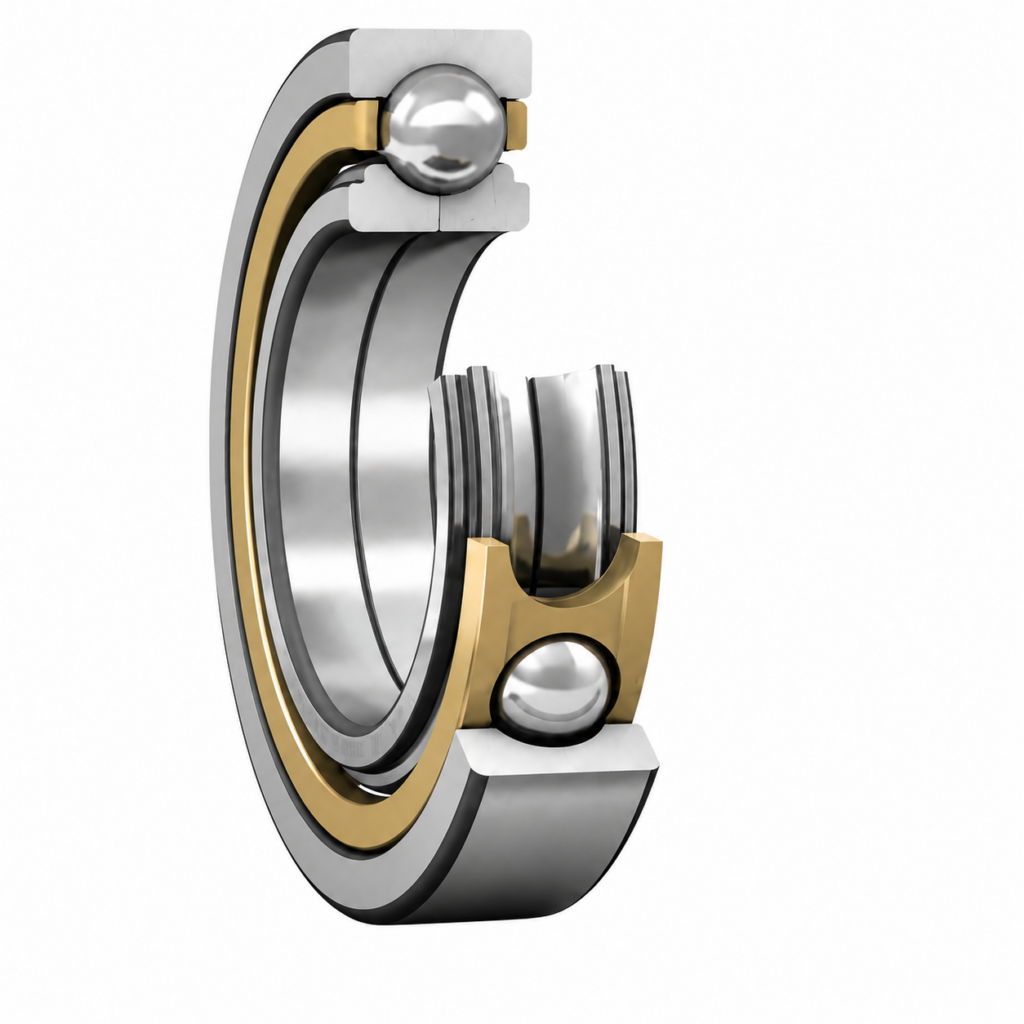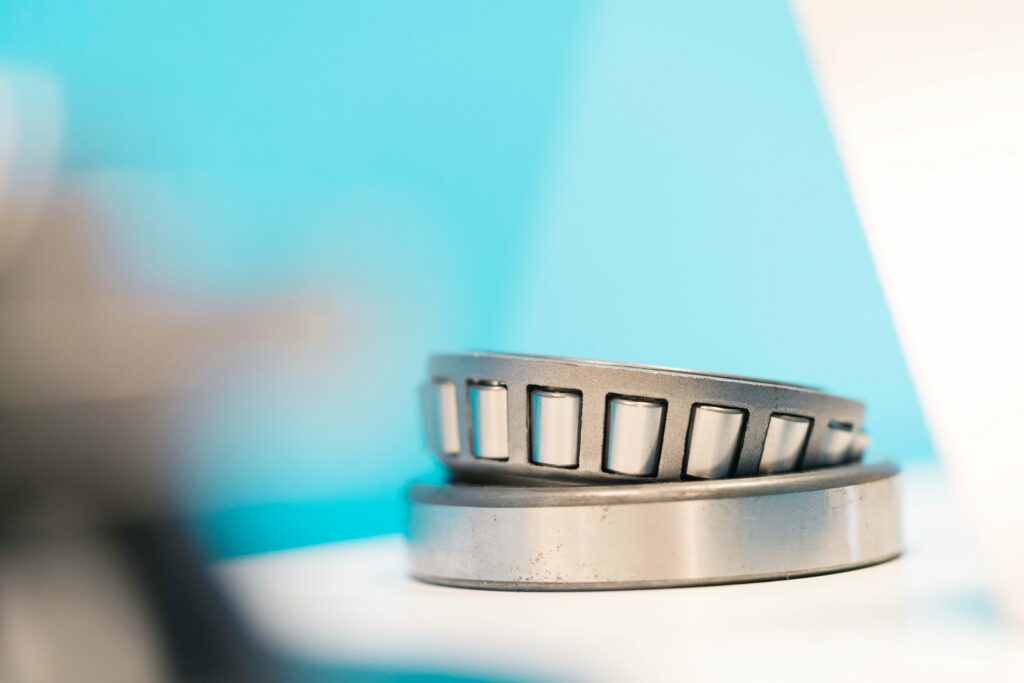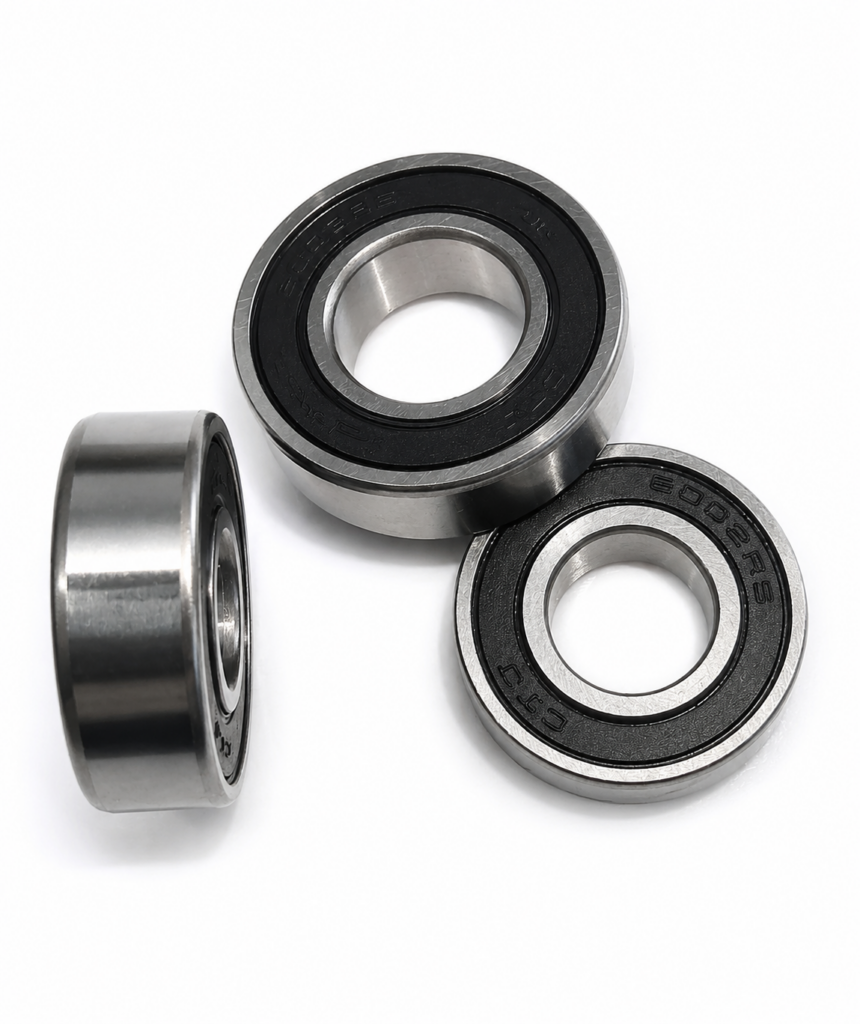
Needle roller bearings are a specialized type of rolling bearing engineered to deliver high radial load capacity within an extremely limited radial space. Their defining feature — long, thin cylindrical rollers called “needles” — allows them to pack significantly more rolling contact surface into a small cross-section than other bearing types. This makes needle roller bearings a critical solution wherever radial space is at a premium but load-carrying capacity still matters. In this guide, we’ll explore the structure, working principle, key features, common configurations, selection criteria, and typical applications of needle roller bearings.
What Is a Needle Roller Bearing?
A needle roller bearing is a rolling-element bearing that uses long, slender cylindrical rollers — known as needle rollers — instead of balls or standard-length cylindrical rollers. These needle rollers typically have a length-to-diameter ratio of at least 2.5:1, sometimes much higher, which allows them to distribute load along a long line of contact while keeping the bearing’s outer diameter only slightly larger than its bore.
This compact radial profile is the single biggest advantage of needle roller bearings: for a given bore size, a needle roller bearing can be significantly smaller in outer diameter than an equivalent deep groove ball bearing or standard cylindrical roller bearing, while still providing strong radial load capacity.
Structure and Components
Needle roller bearings generally consist of the following components, though the exact configuration varies by type:
- Needle Rollers – Long, thin cylindrical rolling elements that provide line contact with the raceway, maximizing load capacity within a minimal cross-section.
- Cage (Retainer) – Keeps the needle rollers evenly spaced and properly aligned, preventing skewing and uneven wear.
- Outer Ring – Provides the outer raceway; in many designs, this is a thin-walled drawn cup rather than a solid machined ring, further reducing size and cost.
- Inner Ring – Optional in many designs. Some needle roller bearings include a hardened, ground inner ring; others are designed to run directly on a hardened and ground shaft, eliminating the inner ring entirely to save even more radial space.
This flexibility — with or without an inner ring — is a key distinguishing feature of needle roller bearings compared to most other rolling bearing types.
Working Principle
The working principle follows the same basic concept as other rolling bearings: rolling elements reduce friction between two rotating or sliding surfaces. What sets needle roller bearings apart is how the long, slender roller geometry is exploited to maximize load capacity within a thin radial section.
Because each needle roller contacts the raceway along its full length (line contact), the load is distributed across a much larger surface area than a ball bearing’s point contact would allow within the same space. This means:
- High Radial Load Capacity – Despite their compact size, needle roller bearings can support substantial radial loads relative to their outer diameter.
- Limited Axial Capacity – Standard needle roller bearings are designed primarily for radial loads and typically cannot support axial (thrust) loads on their own; a separate thrust bearing or ball bearing is often used in combination when axial support is needed.
- Space-Efficient Design – The thin cross-section makes needle roller bearings ideal for applications where radial clearance is severely restricted, such as inside connecting rods or compact gearboxes.
Key Features and Advantages
- Minimal Radial Cross-Section – Enables significant space and weight savings compared to ball or standard roller bearings of equivalent load capacity.
- High Radial Load Capacity – Line contact along the needle’s length allows strong load support despite the small footprint.
- Optional Inner Ring – Full-complement or cage-and-roller assemblies can run directly on a hardened shaft, further minimizing size.
- Variety of Configurations – Available with or without inner rings, with seals, with flanges, or combined with thrust bearings for multi-directional load support.
- Cost-Effective for Compact Designs – Drawn-cup outer ring versions are economical to manufacture, making needle roller bearings a practical choice for high-volume automotive and industrial applications.
Common Types and Configurations
Needle roller bearings come in several standard configurations to suit different design needs:
- Needle Roller Bearings with Inner Ring (e.g., NA series) – Include a separate, hardened inner ring, allowing the bearing to be mounted on a standard (non-hardened) shaft.
- Needle Roller and Cage Assemblies (e.g., K series) – Consist only of needle rollers and a cage, with no inner or outer ring; designed to run directly on a hardened, ground shaft and within a hardened housing bore, minimizing radial section to an absolute minimum.
- Drawn Cup Needle Roller Bearings – Use a thin, drawn-metal outer cup instead of a machined outer ring, reducing cost and size; commonly used in automotive and small-machinery applications.
- Combined Needle Roller Bearings – Integrate a needle roller bearing with a ball or roller thrust bearing in a single unit, allowing simultaneous support of radial and axial loads in a compact package.
- Needle Roller Thrust Bearings – A variation using needle rollers arranged radially (rather than axially) to support pure axial loads in very thin sections.
Common Designations, Sizes, and Materials
Needle roller bearings follow manufacturer-specific and ISO-based numbering systems, often combining a series prefix with bore and width codes. For example, an “NA49” series number typically indicates a needle roller bearing with inner ring, while a “K” prefix often denotes a needle roller and cage assembly without rings.
Common materials include:
- Bearing-Grade Chrome Steel – Standard material for needle rollers and rings, offering high hardness and good fatigue resistance.
- Case-Hardened Steel – Used for shafts and housings that serve directly as raceways in full-complement designs, requiring precise surface hardness and finish.
- Stainless Steel – Used in corrosion-prone environments, such as food processing or marine equipment.
How to Select the Right Needle Roller Bearing
Choosing the correct needle roller bearing involves evaluating several factors:
- Available Radial Space – Determine the maximum allowable outer diameter relative to the shaft (bore) size; this is often the primary driver for choosing a needle roller bearing in the first place.
- Load Type and Direction – Confirm whether the application is purely radial, or whether axial support is also needed (requiring a combined or separate thrust bearing).
- Shaft Hardness and Tolerance – If using a ring-less (full-complement or K-series) design, verify that the shaft can be hardened and ground to the required surface finish and tolerance.
- Speed and Lubrication – Needle roller bearings generally have lower speed limits than ball bearings due to higher friction from line contact and roller skewing tendencies; verify against application RPM requirements and choose appropriate lubrication.
- Sealing Requirements – Consider whether sealed variants are needed to protect against contamination in harsh operating environments.
- Mounting Method – Decide between a drawn cup design (economical, press-fit into housing) or a machined design (higher precision, heavier-duty applications).
Typical Applications
Needle roller bearings are widely used in applications where radial space is limited but load capacity remains important:
- Automotive – Transmission gears, connecting rod (piston pin) bushings, camshafts, and rocker arm pivots.
- Motorcycles and Bicycles – Compact pivot points such as swing arms and pedal/crank assemblies.
- Industrial Machinery – Gearboxes, conveyor rollers, and compact reduction drives.
- Office and Precision Equipment – Small motors, printers, and other compact mechanisms requiring efficient use of limited space.
- Construction and Agricultural Equipment – Compact pivot joints and linkage points subject to high radial loads.
Needle Roller Bearings vs. Other Bearing Types
| Feature | Needle Roller Bearing | Deep Groove Ball Bearing | Cylindrical Roller Bearing |
|---|---|---|---|
| Radial Cross-Section | Very thin | Larger | Larger |
| Radial Load Capacity | High (for its size) | Moderate | High |
| Axial Load Capacity | None/Minimal (standalone) | Moderate, bidirectional | None/Minimal |
| Speed Capability | Moderate (limited by roller skew) | High | Moderate to High |
| Common Use | Space-constrained radial loads | General purpose | Heavy radial loads |
Conclusion
Needle roller bearings solve a problem that few other bearing types can address as efficiently: delivering strong radial load support within an extremely thin radial envelope. Their long, slender rollers maximize contact surface in minimal space, and their flexible configurations — with or without inner rings, in drawn cup or machined form, standalone or combined with thrust bearings — make them adaptable to a wide range of automotive, industrial, and precision applications. Understanding the trade-offs between compact size, load capacity, and speed limitations will help engineers select the right needle roller bearing configuration for reliable, space-efficient performance.
If you’re uncertain which type, ring configuration, or mounting method best fits your application, consulting a bearing supplier or engineer with your specific space, load, and speed requirements is always recommended.